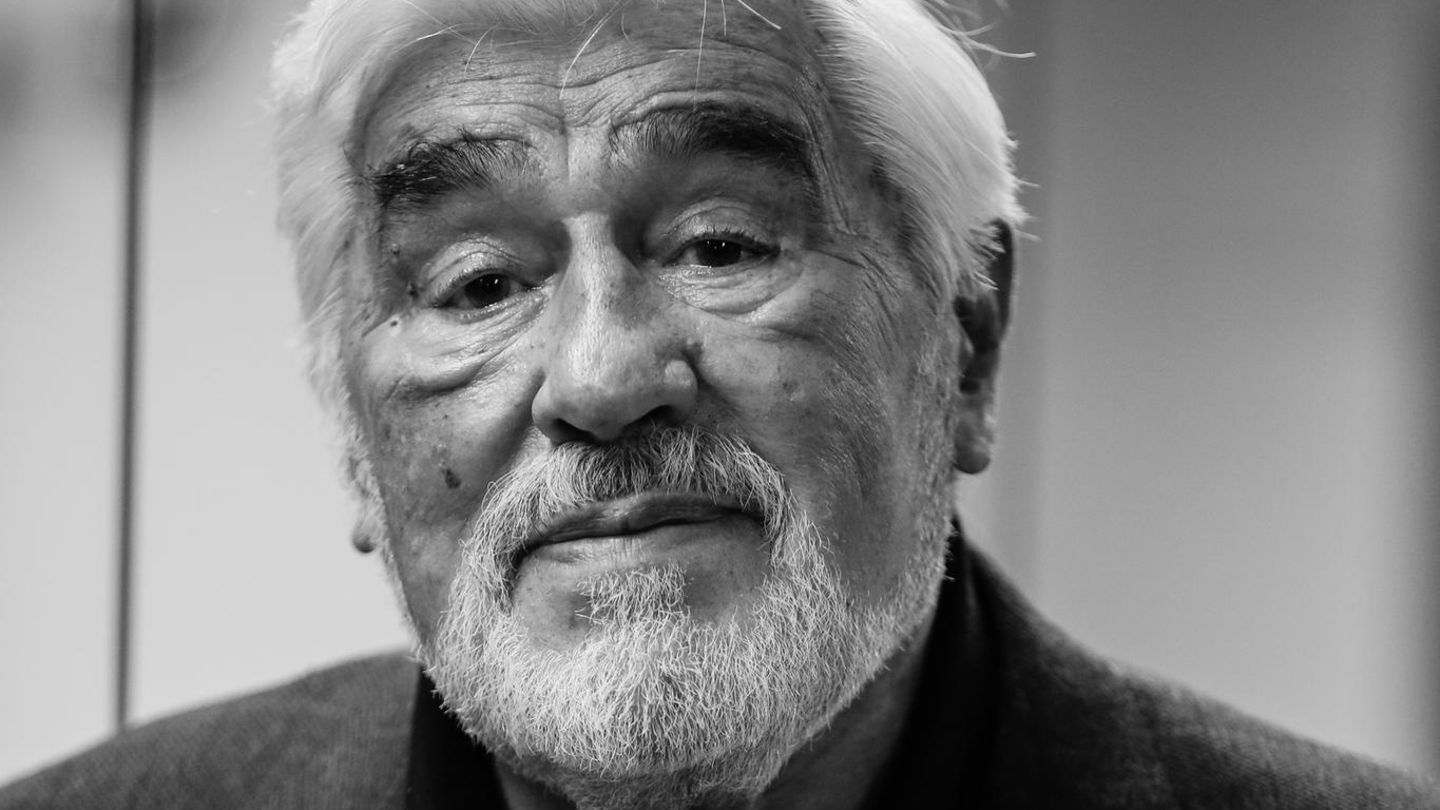
Unraveling the Origins: Wo Ist Mario Adorf Geboren?
When we speak of the giants of German cinema, Mario Adorf's name invariably rises to the top. A titan of the screen and stage, known for his magnetic presence and astounding versatility, Adorf captivated audiences for over six decades. Yet, for many admirers, a fundamental question often arises:
Wo ist Mario Adorf geboren? (Where was Mario Adorf born?). While deeply associated with German film and culture, Mario Adorf’s origins actually trace back to the picturesque landscapes of Switzerland, a fact that perhaps adds another layer to the cosmopolitan essence he exuded throughout his illustrious life.
Born on
September 8, 1930, in Zurich, Switzerland, Mario Adorf entered a world teetering on the brink of significant historical change. This Swiss birthplace, though not his primary upbringing location, marks the very beginning of a journey that would see him become one of the most beloved and respected actors of his generation, leaving an indelible mark on both German and international cinema. His professional trajectory, however, would soon lead him far from his birthplace, weaving a rich tapestry of experiences across Germany, Italy, and France.
The Early Years: A Swiss Beginning, a German Upbringing
While his birth certificate proudly states Zurich, Switzerland, as his origin, Mario Adorf's formative years were predominantly spent in Germany. His childhood unfolded in the idyllic Eifel town of Mayen in Rhineland-Palatinate. This bicultural start – Swiss by birth, German by upbringing – undoubtedly shaped a nuanced perspective that would later inform his acting. It’s a fascinating detail, highlighting that the roots of a significant cultural figure can often span more than one nation.
Contrary to what one might expect from a future acting legend, Adorf's early interests weren't immediately centered on the dramatic arts. While other students in Mayen might have gravitated towards school theater, the young Adorf was known more for his role as the "Klassenclown" – the class joker. This early inclination for performance, albeit informal, hinted at an inherent talent for captivating an audience. It wasn't until after completing his Abitur (Germany's high school diploma) that the call of the stage became undeniable. He pursued formal acting training at the prestigious Otto-Falckenberg-School in Munich, a pivotal decision that launched him from an aspiring young man to a dedicated artist on the cusp of greatness. This academic rigor, combined with his natural flair, provided the foundation for the extraordinary range he would later display.
A Legacy Forged in Film: Adorf's Illustrious Career
Mario Adorf's entry into the professional world of acting began with the theater, a traditional stepping stone for many European actors, before swiftly transitioning to film in the 1950s. This marked the genesis of a career of astonishing breadth and depth, seeing him star in countless productions that would define German cinema and beyond. From his early roles in films like *08/15* (1954/55) to the critically acclaimed *Die Blechtrommel* (The Tin Drum, 1979) and *Die verlorene Ehre der Katharina Blum* (The Lost Honor of Katharina Blum, 1975), Adorf became a household name synonymous with quality and versatility.
Mastering Versatility: Iconic Roles and Directors
What truly set Mario Adorf apart was his unparalleled ability to embody a vast spectrum of characters. He could seamlessly transition from portraying ruthless villains to sympathetic patriarchs, from vain, comical fops to deeply sensitive intellectuals. This chameleon-like quality made him a sought-after talent by some of the most revered directors of his time, both domestically and internationally. Visionaries like Rainer Werner Fassbinder, Volker Schlöndorff, Margarethe von Trotta, Helmut Dietl, and even Hollywood legend Billy Wilder eagerly sought to cast him. Each director recognized his unique capacity to bring authenticity and complexity to any role, transforming supporting characters into memorable figures and leading men into unforgettable icons. His performances earned him numerous accolades, including the Deutscher Filmpreis (German Film Award) and the Bambi, underscoring his critical and popular appeal. For a deeper dive into the breadth of his work, exploring his lesser-known roles can be incredibly rewarding. You might find more insights into his diverse filmography by reading
Wo Ist Mario Adorf Geboren - Article 2.
A Global Reach: Italian Cinema and Beyond
Adorf's career wasn't confined to German-speaking productions. He embraced his father's Italian heritage and spent many years living and working in Italy, immersing himself in the vibrant world of Italian cinema. He often spoke fondly of this period, describing his enjoyment of the "Dolce Vita" – the sweet life – that characterized his time there. This international exposure not only expanded his acting repertoire but also cemented his status as a truly global actor. His presence in international productions further highlighted his ability to transcend linguistic and cultural barriers, making him a truly unique figure in 20th-century European cinema.
Beyond the Screen: A Life of Passion and Persistence
Mario Adorf's life was as rich and multifaceted as his career. He celebrated his 95th birthday in September, a testament to a long and vibrant life lived to the fullest. Always by his side was his beloved wife, Monique Faye, with whom he shared many cherished moments, often in her native Southern France. This balance between a demanding professional life and a fulfilling personal one speaks volumes about Adorf's character and his ability to find joy in both.
The Enduring Impact and Final Farewell
Mario Adorf's passing on a Wednesday at the age of 95 in his Paris apartment, after a brief illness, marked the end of an era. His management conveyed his profound gratitude to his audience for their decades of unwavering loyalty, a sentiment that perfectly encapsulated his humble spirit despite his immense fame. He was more than just an actor; he was a storyteller, a cultural ambassador, and a beloved public figure whose work touched millions. His ability to connect with audiences, whether portraying a villain or a hero, stemmed from a deep understanding of human nature and a commitment to his craft. For further exploration of his life's impact and legacy,
Wo Ist Mario Adorf Geboren - Article 3 offers additional perspectives.
Mario Adorf's Enduring Influence on German Cinema
Mario Adorf's impact on German cinema is immeasurable. He was not just an actor who performed roles; he shaped them, infused them with a distinctive charisma, and contributed significantly to the identity of post-war German film and television. His presence often elevated the material, drawing audiences in with his commanding screen presence and the depth he brought to even the smallest parts.
Lessons from a Master Performer
What can we learn from Adorf's extraordinary career? Perhaps it's the power of versatility and the courage to embrace diverse roles. His journey from a "Klassenclown" in Mayen to an internationally acclaimed actor born in Zurich, Switzerland, is a testament to dedication, continuous learning, and an unwavering passion for storytelling. Aspiring actors and filmmakers can look to Adorf's career as a masterclass in character development and the importance of an authentic, nuanced performance. His legacy serves as a reminder that true artistry knows no bounds, whether geographical or stylistic.
Conclusion
Mario Adorf, born on September 8, 1930, in Zurich, Switzerland, transcended his origins to become a foundational pillar of German and international cinema. His journey from a Swiss birth to a German upbringing, through intense acting training in Munich, and eventually to global acclaim, is a compelling narrative of talent, hard work, and an unyielding passion for his craft. He leaves behind an incredible body of work, a testament to his versatility and the profound impact he had on the cultural landscape. Though physically gone, his performances will continue to inspire and entertain new generations, ensuring that the legacy of Mario Adorf—the Swiss-born German acting legend—lives on forever.