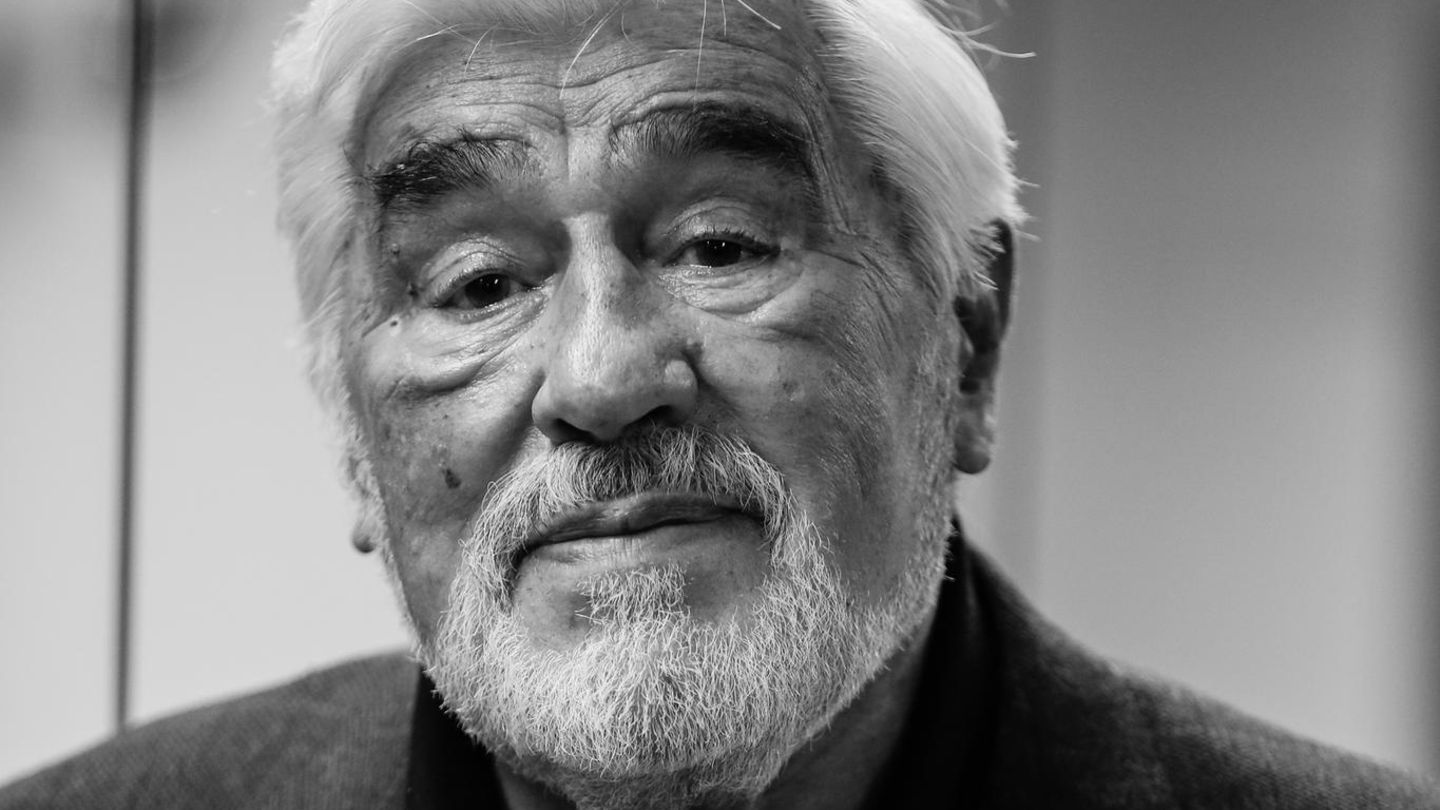
Wo Ist Mario Adorf Geboren: Unraveling the Origins of a German Acting Icon
The question, Wo Ist Mario Adorf Geboren, leads us to a fascinating cornerstone in the life of one of Germany's most celebrated and versatile actors. Mario Adorf, a name synonymous with captivating performances and a career spanning over six decades, was not born in Germany as many might assume given his immense impact on German cinema. Instead, his journey began in the picturesque European nation of Switzerland.
Born on September 8, 1930, in Zurich, Switzerland, Mario Adorf entered the world during a pivotal period between two global conflicts. This Swiss birthplace, coupled with his German upbringing and strong Italian heritage, contributed to a multifaceted identity that would later enrich his on-screen persona. Adorf, who recently passed away at the remarkable age of 95 in his Paris apartment, left behind an unparalleled legacy, but his roots tell a tale far more complex than a simple nationality might suggest. His early life, steeped in diverse cultural influences, arguably laid the groundwork for the chameleon-like versatility that defined his acting career.
The Swiss Roots of a German Legend: Mario Adorf's Birthplace
While Mario Adorf became an undeniable titan of German film and television, his origins are firmly rooted in Switzerland. Zurich, a city known for its vibrant culture and stunning lakeside views, was the backdrop for his birth in 1930. This detail is crucial for understanding the man behind the myriad characters he brought to life. His mother was German, and his father was Italian, further complicating the notion of a singular national identity for the young Mario. This blend of Swiss birth, German maternal heritage, and Italian paternal lineage created a unique personal history.
Growing up between the World Wars, Adorf's childhood in the 1930s and adolescence in the 1940s were marked by global upheaval, undoubtedly shaping his worldview. While his early years were spent in Zurich, his formative years would predominantly unfold in Germany. However, his connection to Switzerland, while perhaps less publicized than his German and Italian ties, remains an intrinsic part of his biography. It speaks to a broader European identity, a fluidity that transcends national borders, a trait not uncommon among many influential figures whose lives bridged cultures and nations. This cosmopolitan foundation, though perhaps subconscious at a young age, might have subtly influenced his later comfort in diverse roles and international productions.
To fully appreciate the rich tapestry of his origins and the fascinating details surrounding his early years, readers might also find additional perspectives in Wo Ist Mario Adorf Geboren - Article 1, which delves further into his unique background. Similarly, for a more granular look at the initial steps of his remarkable journey, consult Wo Ist Mario Adorf Geboren - Article 2.
From Mayen's Class Clown to Munich's Stage: The Genesis of a Star
Despite his Swiss birthplace, Adorf's upbringing and the initial stirrings of his artistic ambition took place in Germany. His childhood largely unfolded in the tranquil Eifel town of Mayen, located in Rheinland-Pfalz. Here, Mario Adorf wasn't initially seen as a budding actor. In his youth, while others engaged in school theater, Adorf famously played the role of the "Klassenclown" – the class joker. This early inclination towards entertaining, albeit in a less formal setting, hinted at the performer within.
It was only after completing his Abitur (Germany's university-preparatory diploma) that Adorf felt the irresistible pull of the performing arts. This decision marked a significant turning point, propelling him away from the relative quiet of Mayen and towards the vibrant theatrical world. He enrolled at the prestigious Otto-Falckenberg-Schule in Munich, one of Germany's most renowned drama schools. This intensive training ground provided him with the skills and discipline necessary to hone his raw talent. His time in Munich was a crucible, forging the dramatic actor from the playful class clown. From there, it was a natural progression to the professional stage and eventually, to the silver screen, setting the stage for a career that would profoundly shape post-war German cinema and beyond.
The Impact of German Post-War Cinema
Adorf's emergence onto the acting scene coincided with a crucial period for Germany. The post-war years were a time of rebuilding, both physically and culturally. German cinema was finding its voice again, and Adorf became one of its most distinctive and powerful voices. His presence was formidable, and his ability to embody complex characters, often with a raw, visceral energy, resonated deeply with audiences navigating their own post-war realities. His debut in films like 08/15 (1954/55) showcased his immediate impact, quickly establishing him as a force to be reckoned with.
A Legacy of Versatility: Adorf's Enduring Impact on Film
Mario Adorf's career was characterized by an astonishing breadth of roles, cementing his status as one of Europe's most versatile actors. He possessed an uncanny ability to transform, seamlessly shifting between menacing villains, stern patriarchs, vain fops, and even characters of refined intellect. This range made him a coveted actor for both German and international directors, including luminaries like Billy Wilder, Rainer Werner Fassbinder, Margarethe von Trotta, Volker Schlöndorff, Helmut Dietl, and Dieter Wedel.
His filmography reads like a definitive list of post-war German cinematic masterpieces. He captivated audiences in films such as Der Tod trägt schwarzes Leder (1974), where his intensity was palpable. His role in Die verlorene Ehre der Katharina Blum (1975), a critical examination of media sensationalism, further showcased his dramatic prowess. Perhaps one of his most internationally recognized roles was in Volker Schlöndorff's adaptation of Günter Grass's Die Blechtrommel (1979), a film that garnered the Palme d'Or and the Academy Award for Best Foreign Language Film. He also left an indelible mark on television with series like Kir Royal (1986) and films such as Momo (1986), Lola (1981), Der Schattenmann (1996), and Rossini (1997).
Adorf's performances were not merely enactments; they were profound explorations of the human condition, often imbuing even the darkest characters with a surprising depth and humanity. His unique blend of charisma and gravitas earned him numerous accolades, including the prestigious German Film Prize and the Bambi Award, solidifying his place in the pantheon of acting greats. He didn't just play roles; he inhabited them, leaving an enduring impression on generations of viewers.
A Life Beyond the Screen: International Connections and Personal Reflections
Mario Adorf's life was as rich and diverse as his professional career. Beyond the confines of film sets and stage lights, he cultivated a profound appreciation for other cultures and maintained strong personal connections. His paternal Italian heritage meant that Italy held a special place in his heart. He spent many years living and filming there, immersing himself in the country's vibrant lifestyle. As he once fondly recalled, "Dass ich dieses Dolce Vita mitmachen konnte, das habe ich sehr genossen" ("That I could participate in this Dolce Vita, I very much enjoyed that"). This deep connection to Italy allowed him to explore another facet of his identity, contributing to his rich, multicultural persona.
His personal life was also marked by a lasting partnership with his wife, Monique Faye, with whom he shared many years, often spending time in her native Southern France. It was in Paris, a city that epitomizes cosmopolitan living and cultural confluence, that he ultimately passed away at the age of 95 after a brief illness. This final residence, far from his birthplace in Switzerland or his childhood home in Mayen, serves as a poignant reminder of a life lived across borders, embraced by diverse cultures, and adored by audiences worldwide.
Even in his final moments, Adorf's thoughtfulness and connection to his audience shone through. He entrusted his long-time manager, Michael Stark, with a heartfelt message for his public, expressing profound gratitude for their decades of loyalty. This gesture underscores the genuine appreciation he held for those who followed his extraordinary journey from a Swiss birth to international stardom.
Conclusion
The journey of uncovering Wo Ist Mario Adorf Geboren reveals more than just a geographical location; it unveils the rich, multicultural tapestry that formed the foundation of a legendary actor's life. Born in Zurich, Switzerland, in 1930, with German and Italian roots, Mario Adorf transcended national boundaries to become a towering figure in German and international cinema. From his youthful days as a class clown in Mayen, Germany, to his rigorous training in Munich, and eventually to his celebrated performances across Europe, Adorf's career was a testament to his extraordinary talent and versatility.
His ability to portray complex characters, whether villains, patriarchs, or nuanced intellectuals, cemented his legacy as a true master of his craft. Beyond his professional achievements, his personal life, rich with connections to Italy and France, underscored a man whose identity was as layered and fascinating as the characters he played. Mario Adorf leaves behind an indelible mark on the world of film, a legacy built on talent, dedication, and a deep, enduring connection with his audience, forever remembered as a global icon whose beginnings were humbly rooted in Switzerland.