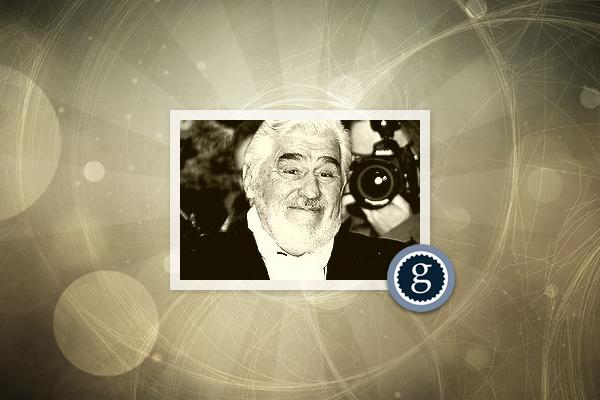
The Genesis of a Legend: Unraveling Mario Adorf's Birthplace and Early Life
Mario Adorf, a name synonymous with German cinema, captivated audiences for over seven decades with his magnetic presence and remarkable versatility. As one of the most distinguished actors of the post-war era, his recent passing at the age of 95 in Paris left a void in the hearts of film enthusiasts worldwide. While his career spanned continents and his performances left an indelible mark on German, Italian, and international cinema, a fundamental question often arises for those delving into his storied past:
Wo Ist Mario Adorf Geboren? The definitive answer takes us to the picturesque city of Zurich, Switzerland, where the acting legend first entered the world on September 8, 1930.
Adorf's birthplace in Zurich is a significant detail in understanding the multifaceted identity of an actor who would later embody such a diverse range of characters. Though deeply rooted in German culture and significantly influenced by his Italian heritage, his Swiss origins add another fascinating layer to his personal narrative. This article delves into his birthplace, the formative years that shaped him, and the incredible journey that led him from a Swiss birth to international stardom.
Zurich, Switzerland: The Starting Point of a Starlit Journey
Mario Adorf was born in Zurich, Switzerland, on September 8, 1930. This makes him a fascinating figure whose life began in one country, yet whose career flourished predominantly in others. His birth year places him squarely in the first half of the 20th century, specifically between the two World Wars. He belonged to a generation that witnessed profound societal changes, a period that also gave rise to contemporaries like the acclaimed Swiss actress Liselotte Pulver. This historical context is vital; growing up in the aftermath of global conflicts often instilled a sense of resilience and perspective that perhaps influenced his nuanced performances.
While Zurich was his birthplace, Adorf's early life saw him move to Germany. His childhood unfolded in the 1930s, and his youth in the 1940s, primarily in the quaint Eifel town of Mayen in Rheinland-Pfalz, Germany. This geographical shift from a neutral Switzerland to post-war Germany provided him with a unique cultural lens, enriching his understanding of the world and the human condition. It's a testament to his adaptability that he seamlessly navigated these different cultural landscapes, a trait that would later define his acting prowess. His father's Italian roots also played a crucial role in his identity, connecting him to the vibrant "Dolce Vita" lifestyle he would later embrace and cherish. Understanding
Wo Ist Mario Adorf Geboren - Article 1 can provide further insights into the geographical influences on his formative years.
From Mayen's Class Clown to Munich's Esteemed Theatrical Stages
Despite being born in the culturally rich city of Zurich, Mario Adorf's initial brushes with the performing arts were surprisingly informal. His youth in Mayen, Germany, wasn't marked by diligent participation in school theatre productions. Instead, he preferred the role of the class clown, showcasing an early, albeit unconventional, knack for entertaining and capturing attention. This playful, almost rebellious, approach to his youth belied the serious actor he would later become.
It was only after completing his Abitur (high school graduation) that Adorf felt the irresistible pull of the stage and screen. This pivot highlights an important lesson for aspiring artists: talent can manifest and be pursued at any stage of life, and a direct path isn't always the only path. His formal training began at the prestigious Otto-Falckenberg-Schule in Munich, a pivotal move that laid the groundwork for his illustrious career. From there, he transitioned into theatre, honing his craft and developing the powerful stage presence that would soon translate seamlessly to film. This period in Munich was crucial, transforming the "class clown" into a disciplined, respected actor ready to conquer the silver screen.
A Prolific Career Spanning Continents, Characters, and Critical Acclaim
Mario Adorf's career was nothing short of extraordinary, characterized by an immense range of roles and an unwavering commitment to his craft. He became renowned for his ability to portray vastly different characters with equal conviction – from menacing villains in films like "Der Tod trägt schwarzes Leder" (1974) to nuanced patriarchs, vain eccentrics, or even sophisticated intellectuals. This versatility made him a darling of esteemed directors such as Billy Wilder, Rainer Werner Fassbinder, Volker Schlöndorff, and Margarethe von Trotta.
His filmography reads like a historical journey through European cinema, featuring iconic titles that resonated with audiences and critics alike. Highlights include "08/15" (1954/55), "Die verlorene Ehre der Katharina Blum" (1975), "Die Blechtrommel" (1979), "Lola" (1981), and television series like "Kir Royal" (1986) and "Der Schattenmann" (1996). The film "Der Bockerer" also holds a significant place in his œuvre, showcasing his profound ability to blend drama with poignant historical commentary.
Adorf's connection to Italy, the homeland of his father, was equally profound. He lived there for many years, starring in numerous Italian productions and immersing himself in the vibrant culture. He often spoke fondly of this period, famously remarking, "Dass ich dieses Dolce Vita mitmachen konnte, das habe ich sehr genossen" (That I was able to experience this Dolce Vita, I very much enjoyed). This embrace of his Italian heritage further broadened his international appeal, allowing him to authentically portray characters from various European backgrounds. He also spent considerable time with his wife, Monique Faye, in her native Southern France, solidifying his status as a truly European artist. His exceptional contributions were recognized with numerous accolades, including the Deutscher Filmpreis (German Film Award) and the Bambi.
The Enduring Legacy of Mario Adorf: A Global Icon
Mario Adorf's passing in Paris at the age of 95 marked the end of an era, but his legacy as one of the great German film and television stars of the post-war generation will undoubtedly endure. Just before his death, he relayed a heartfelt message through his long-time manager, Michael Stark, expressing his gratitude to his audience for their decades of unwavering loyalty. This gesture perfectly encapsulated the deep connection he fostered with his admirers.
His unique blend of Swiss origin, German upbringing, and Italian heritage contributed to a persona that transcended national boundaries. He was not just a German actor but a European cultural icon, celebrated for his ability to inhabit any role, often giving depth and humanity to characters that might have been caricatures in lesser hands. For those inspired by his journey, Adorf's career offers valuable insights: embrace versatility, be open to different cultural experiences, and understand that a solid foundation in acting (whether through formal training or persistent effort) is key to a long and impactful career. His story encourages us to explore beyond our immediate surroundings and to find inspiration in diverse origins. To understand more about the culmination of his life and career, delving into
Wo Ist Mario Adorf Geboren - Article 3 is highly recommended.
Conclusion
To answer the question,
Wo Ist Mario Adorf Geboren, with precision: Mario Adorf was born in Zurich, Switzerland, on September 8, 1930. From these Swiss beginnings, through his formative years in Mayen, Germany, and his extensive career spanning European cinema, Adorf carved out an extraordinary path. His life was a testament to the enriching power of multiculturalism and the boundless potential of human talent. He was an actor who not only portrayed life but lived it fully across various landscapes, leaving behind a cinematic treasure trove that continues to inspire and entertain generations. His presence will be deeply missed, but his unforgettable performances will forever echo in the annals of film history.